
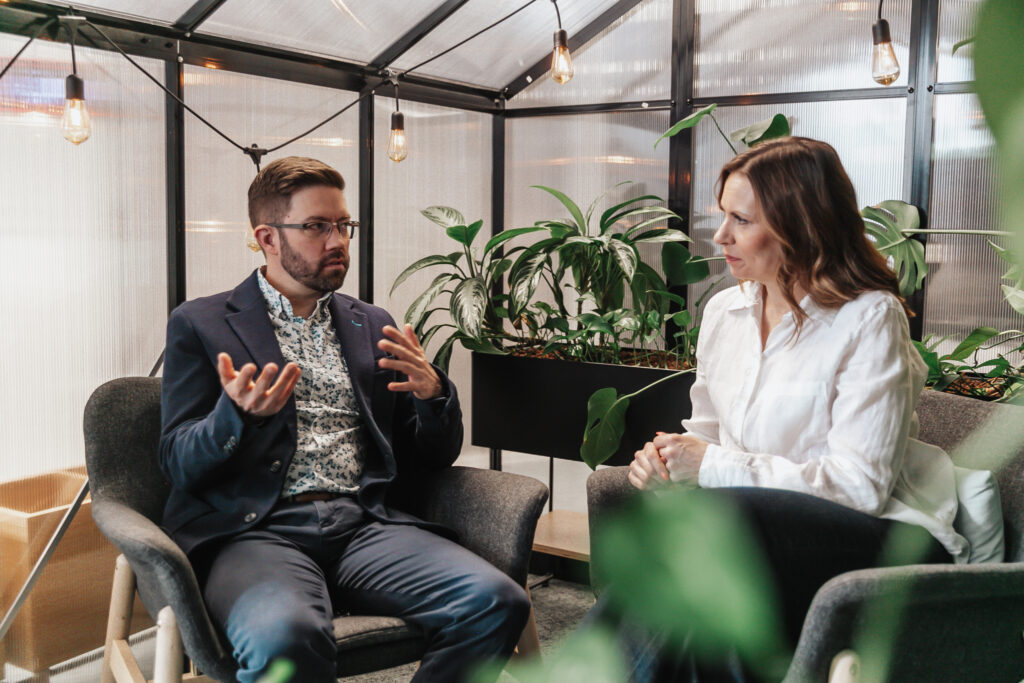
Coaching has become one of the most widely discussed ways of supporting learning, working life and wellbeing in recent years. It is used in companies, educational institutions, and the social and healthcare sectors, and increasingly also in the everyday lives of families and individuals. Although coaching is widely talked about, its core can sometimes remain unclear. Coaching is not about giving advice, teaching, or solving problems on behalf of someone else. It is a way of meeting and supporting a person so that their own resources, strengths, and solutions can come to the forefront.
What Does Coaching Mean?
Coaching is a goal-oriented and interactive process designed to help a person move towards their own goals. A coach is not an expert who tells someone what they should do, but a partner who uses questions, active listening and reflection to help the person discover new perspectives and solutions.
Coaching is based on the idea that people often already have far more knowledge, experience and potential than they themselves realize. When the environment feels safe and the interaction is built on respect and appreciation, people have the opportunity to gain insights that can lead to more lasting change than advice given from the outside.
Coaching Is a Mindset
At Oppiko, coaching is understood above all as a mindset. It means meeting people with curiosity, respect and a genuine belief in their strengths. The focus is not solely on what is difficult or what is not working, but also on what is already working and what resources the person has available.
This approach does not mean minimizing problems or avoiding difficult issues. Quite the opposite. In coaching, challenges are acknowledged realistically, while possibilities, alternatives and concrete next steps are explored alongside them. Even small successes can strengthen a person’s sense of self-efficacy and create a foundation for lasting change.
Coaching Supports Wellbeing
The impact of coaching extends beyond achieving goals. When people learn to recognize their own strengths, values and ways of functioning, their self-awareness also increases. At the same time, many wellbeing skills can be strengthened, including self-compassion, emotional awareness, recovery, interpersonal skills and the ability to regulate stress and workload.
Research suggests that using personal strengths can increase motivation, engagement and psychological wellbeing. When people feel heard and valued, they may also find it easier to identify solutions to challenging situations.
Where Can Coaching Be Used?
Coaching can be applied to almost any area of life. It can be used, for example:
- in working life to support leadership and management
- in education to strengthen learning and motivation
- in social and healthcare settings to support people’s resources and agency
- in neuropsychiatric coaching to strengthen everyday skills
- in career planning and life transitions
- to support individual wellbeing and personal growth.
What these situations have in common is that the goal is not to solve problems on behalf of another person, but to strengthen their ability to find solutions and act on them.
A Good Coach Builds Trust
The most important tool in coaching is not a particular method, but the coach themselves. Genuine listening, presence and respectful interaction create a safe environment in which a person can explore even difficult issues. A good coach knows how to ask more than they answer and helps the client see new possibilities without taking responsibility for the client’s decisions.
A trusting and confidential relationship is an essential part of effective coaching. When people feel that they are being met without judgment, it becomes easier for them to recognize their own resources and take steps towards their goals.
Coaching Supports Sustainable Change
Real change rarely happens in a single moment. It is built through small insights, new ways of acting and experiences of success that strengthen belief in one’s own abilities. Coaching provides a structure in which these changes can develop in a safe and purposeful way.
That is why coaching is not simply a method, but a way of thinking about people. It is based on the belief that everyone has the ability to learn, develop and find their own solutions. When attention is directed towards strengths, possibilities and concrete steps forward, the conditions for meaningful and lasting change are created.
A coaching mindset is a central part of the Oppiko Method®.